Markthalle
Indoor market hall with diverse food stalls offering everything from Thai to Swiss to Middle Eastern cuisine. Locals meet here for lunch, drinks, and weekend brunch. Authentic atmosphere, communal tables, and affordable prices.
Local Life
Where Bernese actually go
Want to experience Bern like a local? These are the spots where Bernese actually spend their time – no tourist menus or crowds, just authentic city life.
Indoor market hall with diverse food stalls offering everything from Thai to Swiss to Middle Eastern cuisine. Locals meet here for lunch, drinks, and weekend brunch. Authentic atmosphere, communal tables, and affordable prices.
Unpretentious neighborhood café in Lorraine where locals gather for coffee, beer, and conversation. No tourists, just authentic Bernese café culture and friendly regulars.
Former gymnastics hall converted into cultural center with restaurant, bar, and concert venue. Popular with locals for weekend brunches and evening drinks. Creative menu and relaxed atmosphere.
Riverside restaurant and bar directly on the Aare with expansive terrace. Locals love the summer sunset views, cocktails, and relaxed vibe. Book ahead for terrace seating.
Weekly farmers' market in residential Länggasse where locals shop for produce, cheese, bread, and flowers. Tuesday and Saturday mornings. Authentic neighborhood atmosphere.
Community swimming pool and bath house in Lorraine. Locals gather here for sauna, swimming, and socializing. More authentic than touristy Marzili.
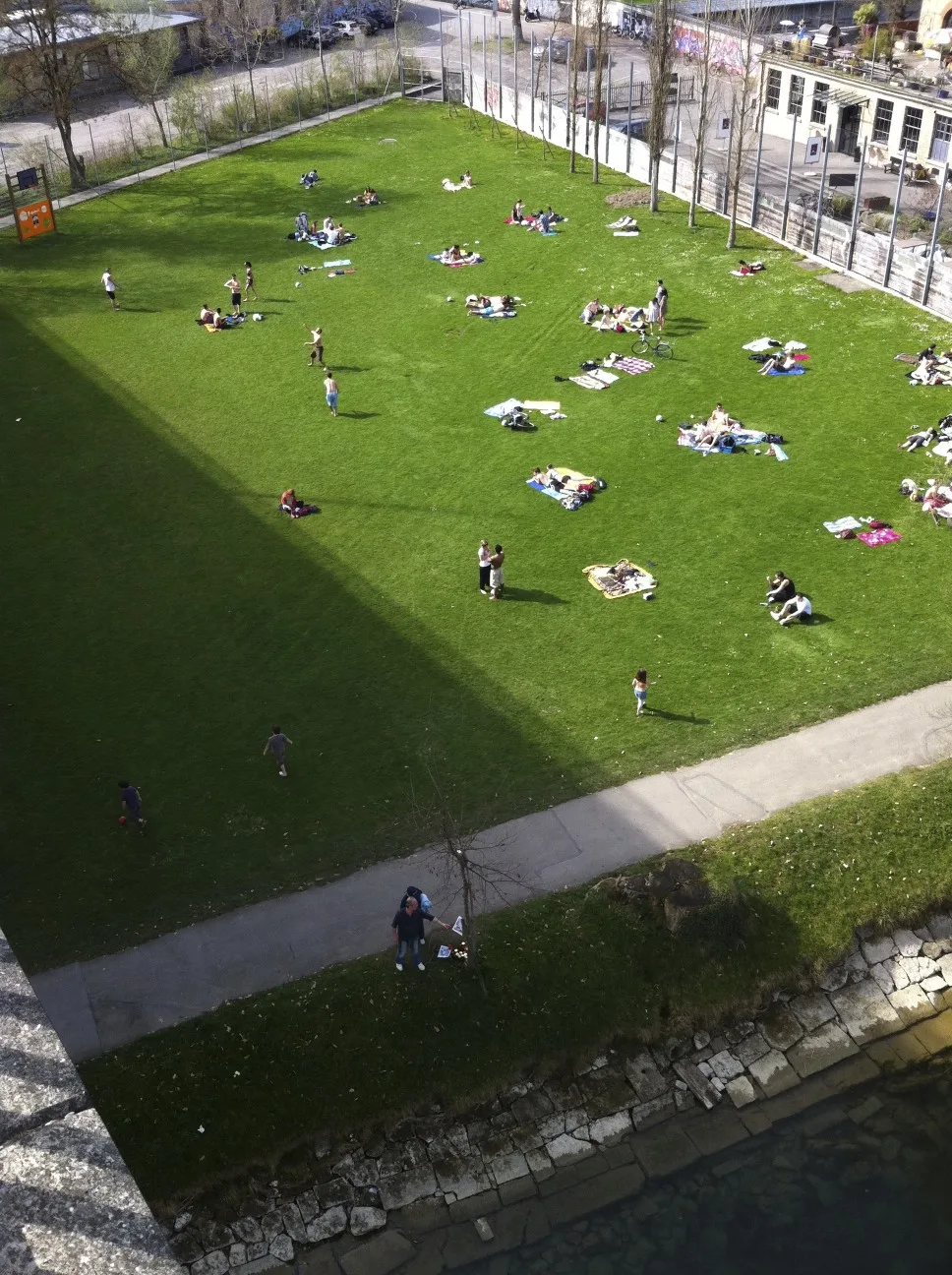
The riverside is where Bernese life unfolds in summer
Bern works best when you plan lightly: pick one anchor (a market hall, a river terrace, a neighborhood café), then let your walk between stops be the main event.
A simple rhythm: coffee → one wander loop → lunch → riverside hour → sunset drink. If you’re short on time, start with the Old Town arcades and end near the Aare.

Bern’s local life doesn’t happen on the main shopping streets—it happens a bridge or two away, in the residential quarters and down by the river. Knowing where to point yourself is most of the work. North of the centre, across the Lorrainebrücke, Lorraine is the city’s bohemian quarter: low-key cafés, an alternative streak, and the community Lorrainebad pool on the Aare that regulars prefer to the busier Marzili. West of the station, Länggasse is the university district, where the rhythm follows the students—affordable cafés, neighbourhood squares like Viktoriaplatz, and a weekly farmers’ market that’s pure everyday Bern.
When the weather warms, the centre of gravity shifts entirely to the Aare. Locals finish work and walk straight to the river to swim, float or just lie on the grass; the free Marzilibad lawns below the Bundeshaus are the classic gathering point, and riverside terraces like Schwellenmätteli catch the evening sun. In the cooler months, life retreats indoors to market halls, long brunches in converted cultural venues, and cosy cellar bars in the Old Town. None of it requires a reservation or a guidebook—just a willingness to follow the locals’ pace.
Eating well in Bern without falling into a tourist trap is mostly about format. Market hallsand food courts are where Bernese grab a relaxed, affordable lunch—communal tables, a spread of cuisines, and prices a notch below the Old Town’s terraces. Brunch is close to a local institution: at weekends, converted cultural venues and neighbourhood cafés fill with regulars lingering over long, leisurely mornings, so arrive early or settle in for a wait.
When it comes to the local specialities, lean into the regional dishes the city is built on. Rösti, the pan-fried grated-potato classic, is the everyday staple; Berner Platte is the hearty shared platter of boiled and smoked meats with sauerkraut and beans, tied by tradition to a Bernese celebration feast; and Ghackets mit Hörnli—minced beef with macaroni and apple sauce—is pure comfort food. In the cold months, fondue and raclette take over the tables. Bern is also a chocolate city: Toblerone was invented here in 1908, and the old Kramgasse and Spitalgasse confiseries are worth a stop. Plan your meals with our Swiss cuisine guide and best rösti picks.
For drinks, the apéro is the ritual. On warm evenings that means the riverbanks and terraces; the rest of the year, the Old Town’s historic cellar bars and the wine bars tucked under the arcades. A coffee culture runs quietly underneath it all—Bern takes its espresso seriously without making a fuss about it, and a mid-afternoon coffee-and-pastry stop is as Bernese a habit as any meal on this list.
Bern runs on a gentle, predictable rhythm, and matching it is the easiest way to feel less like a tourist:
For more on the districts themselves, see our neighbourhoods guide, Lorraine and Länggasse.
Match this rhythm rather than fighting it and the city opens up: a market-morning coffee, a riverside afternoon and a cellar-bar evening is about as local as a visitor’s day in Bern gets.
Away from the main Old Town drag: market halls and food courts for casual, affordable meals; neighbourhood cafés in Lorraine and Länggasse; and riverside spots in summer. The simplest rule is to walk a couple of streets off the central axis before you sit down.
Lorraine for the bohemian, alternative side; Länggasse for the student energy and weekly markets; and Matte, the old riverside artisans’ quarter, for a hidden, lived-in feel just below the Old Town.
No—service is included by law in the prices you see. It’s customary to round up or leave around 10% for good service, but it’s entirely discretionary. Switzerland uses the Swiss franc, and cards are accepted almost everywhere.
It’s calm by big-city standards. For more buzz, aim for weekend evenings in the Old Town’s bars and cellars or down in the Matte; midweek, lean into the quiet—it’s part of the city’s charm.
Keep exploring Bern with guides that pair well with this one.