
Accommodation
Where to Stay in Bern
First-time visitor guide to the best areas
Bern is small enough that “the wrong neighborhood” is rarely a disaster—but choosing the right area can make the trip feel effortless. The Old Town puts arcades and landmarks on your doorstep; nearby districts offer better value and a more local mood, often with equally good cafés and dinner options. This guide focuses on first-time priorities: walkability, atmosphere, and time saved.
Two facts shape every decision here. First, the geography is forgiving: the UNESCO Old Town sits on a tight loop of the Aare, and the whole centre is walkable end to end in well under half an hour, so even a “far” central hotel is close by big-city standards. Second, the central station — Bern Hauptbahnhof, almost always just called “the HB” — is right at the western edge of the Old Town, which means most areas worth staying in are a short walk or a couple of tram stops from your arrival point and from every day-trip departure.
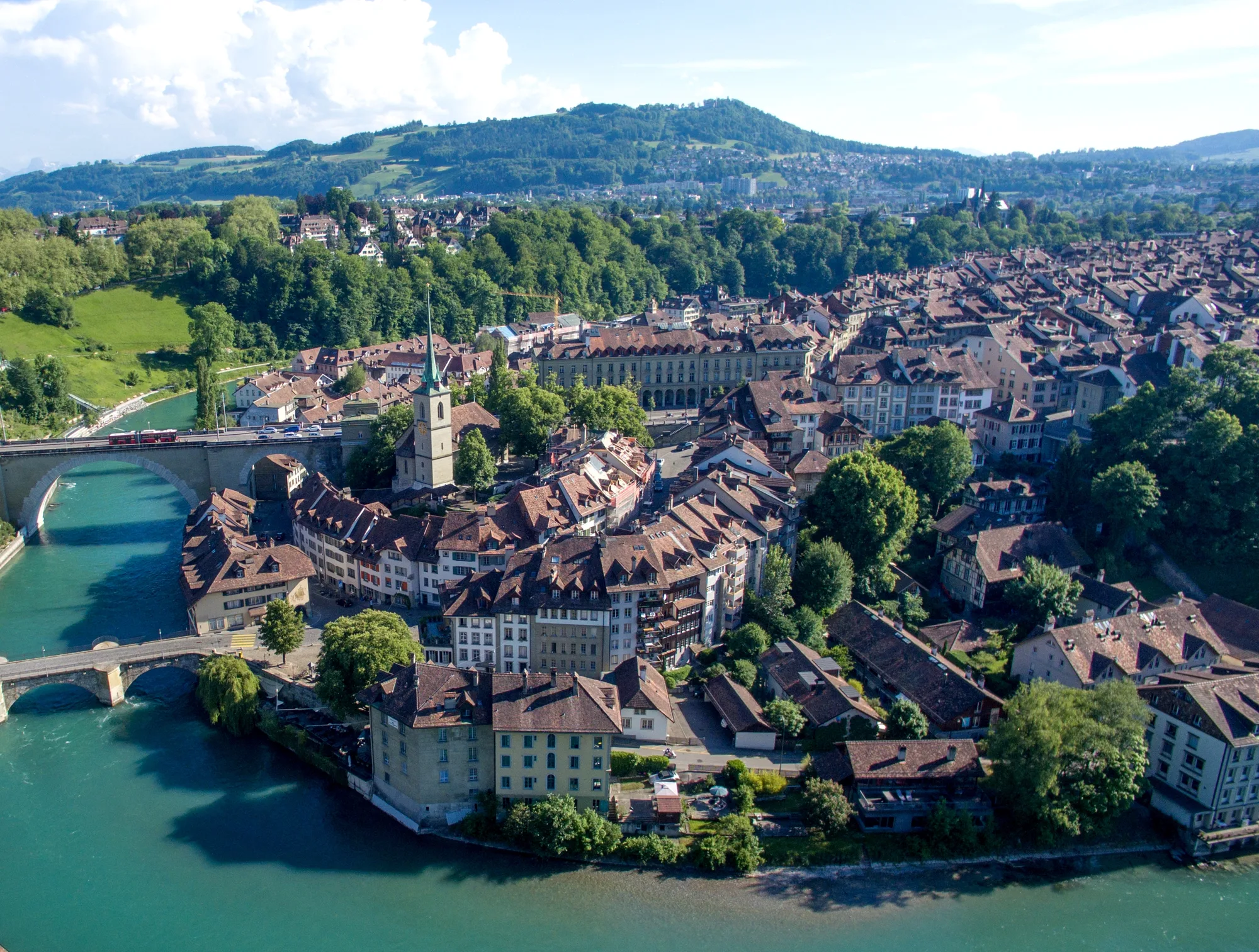
- Best for first timers: the UNESCO Old Town (Altstadt) for maximum charm.
- Best value: Länggasse or near the station for space and local feel.
- Best for romance: the Old Town or a boutique stay near the river.
Best areas to stay, in detail
Old Town (Altstadt) — the classic first-time choice
This is the postcard: roughly six kilometres of covered sandstone arcades (the Lauben), painted Renaissance fountains, the Zytglogge astronomical clock, and the long pedestrian spine of Marktgasse, Kramgasse and Gerechtigkeitsgasse running down toward the Nydegg and the bears. Stay here and you step straight into the mood the moment you leave the door — landmarks, cellar restaurants and morning cafés are all within a few minutes’ walk.
Who it suits: first-timers, couples, short stays, and anyone who wants the city’s atmosphere to be the whole experience — especially in winter, when being able to dart between arcades and warm cafés is a real comfort.
Trade-offs: it’s the priciest area, rooms in historic buildings can be small, and the lower Old Town has cobbles and slopes. The very centre can also be lively in the evening near the busier squares.
Near the station (Hauptbahnhof / Bahnhof area)
The blocks around Bern HB — toward Bubenbergplatz, the Bollwerk and the western end of the Old Town — are the most practical base in the city. You’re a roller-bag’s walk from your train, steps from every day-trip departure, and still only minutes on foot from the arcades. This is the sweet spot for travellers doing day trips or arriving late and leaving early.
Who it suits: day-trippers, business travellers, anyone with an early train, and value-seekers (you’ll often find more choice and better rates here than deep in the Old Town).
Trade-offs: it’s more functional than romantic, and the immediate station surroundings are busier and less pretty than the medieval core a few minutes east.
Kirchenfeld — quiet, elegant, museum-side
Across the Kirchenfeldbrücke from the Old Town, Kirchenfeld is a leafy, dignified residential quarter and Bern’s museum belt — the Museum of Communication, the Historical Museum/Einstein Museum and the Kunsthalle are all here, and the Aare is just below. It feels calm and grown-up, with handsome streets and easy walks back into the centre across the bridge.
Who it suits: museum-lovers, couples wanting quiet, and travellers who value a peaceful night over being in the thick of it.
Trade-offs: fewer late-night options on your doorstep, and you’ll cross the bridge for the full Old Town buzz — though it’s only a few minutes’ walk.
Länggasse — student energy and better value
Behind the station and around the university, Länggasse is younger, livelier and more everyday: good independent cafés, casual and international dining, and generally friendlier prices. It’s a genuine neighbourhood rather than a film set, and an easy walk or short tram ride to the centre. See our Länggasse guide.
Who it suits: longer stays, budget-conscious travellers, foodies who like a local scene, and anyone happy to trade medieval scenery for value and space.
Trade-offs: the architecture is ordinary city, not UNESCO — you visit the Old Town rather than waking up inside it.
Matte & the riverside — lanes by the Aare
Down at river level beneath the Old Town, the Matte is a tiny, atmospheric quarter of old lanes hard against the turquoise Aare — characterful and intimate, with the Marzili swimming meadows and the bears close by. It comes into its own in warm weather, when the river is the centre of life. See our Matte guide.
Who it suits: romantics and summer visitors who want river charm and a tucked-away local feel.
Trade-offs: limited accommodation, and steep stairs or the little Mattelift connect it to the Old Town above — worth checking access if mobility or heavy luggage is a concern.
For a fuller neighborhood-by-neighborhood tour, see Best Neighborhoods in Bern, and to anchor yourself in the centre, the Old Town guide.
Match the area to your kind of trip
Rather than hunting for the “best” area in the abstract, it’s easier to match the neighbourhood to how you actually plan to spend your days. Because Bern is so compact, no choice is wrong — you’re trading off small differences in price, atmosphere and convenience rather than gaining or losing whole parts of the city.
A romantic weekend
Stay in the Old Town or in a boutique place near the river. Waking up among the arcades, strolling to a cellar dinner and ending the night with the Aare glittering below the Rosengarten is the whole point of a Bern getaway. See romantic hotels and the couples guide.
A day-trip base for the mountains
Stay near the station. When your days revolve around early trains to Thun, Interlaken or the Jungfrau, the five-minute walk to your platform is worth more than a scenic address. Plan the outings with our day trips guide.
A longer or budget-minded stay
Länggasse gives you space, local cafés, everyday dining and friendlier prices, with the centre a short walk or tram ride away. It’s the choice when you want to live a little more like a resident.
A culture-and-museums trip
Kirchenfeld puts you in the quiet, handsome museum quarter, a short walk across the bridge from the Old Town and steps from the city’s main collections. Pair it with the best museums in Bern.
A summer, river-led visit
If you’re here for the Aare — swimming, the Marzili lawns, riverside terraces — the Matte and riverside lanes put you at water level, though stairs and limited rooms mean it suits the adventurous more than the heavily-laden.

Every neighborhood is a short walk from the Old Town
The free Bern Ticket — a real perk worth using
One of the best reasons to book any registered accommodation in Bern is the Bern Ticket. If you stay overnight in a Bern hotel, hostel or apartment, every guest aged 6 and over receives a free Bern Ticket at check-in. It covers free travel on the city’s buses, trams and S-Bahn within Libero zones 100/101 — which is the whole central area you’ll actually use — plus the Gurten and Marzili funiculars and the lift up to the Bern Minster platform. It’s valid from 00:00 on your first day until 05:00 the day after you leave, so it spans your entire stay.
In practice this is a genuine saving: a single city ticket is CHF 5.20 and a Bern day pass is CHF 10.40, so a couple of rides a day plus a trip up the Gurten adds up fast — and you get it simply for sleeping in the city. It also takes the “is this hotel too far?” pressure off, because a tram ride into the centre costs you nothing. The scheme is run city-wide, but it doesn’t hurt to confirm your accommodation issues it when you book. Full details are on our Bern Ticket page.
Getting to your hotel — and around once you’re there
Almost everyone arrives by train at Bern HB, which sits at the western edge of the Old Town. From there, most central accommodation is a short walk or a couple of tram stops away — and if you have the free Bern Ticket waiting at check-in, that first ride is on the house. The pedestrian heart of the Old Town runs gently downhill from the station along Marktgasse, Kramgasse and Gerechtigkeitsgasse toward the river and the bears, so an Old Town hotel is often genuinely walkable with luggage, give or take some cobbles.
A word on those cobbles: the lower Old Town, the Matte and the riverside have stairs, slopes and uneven paving that look charming and pull at a roller-bag. If you’re travelling with heavy luggage, limited mobility, or a stroller, it’s worth checking how your specific address connects to the flat upper streets — a hotel near the station or on the main Old Town spine is the easier landing.
Once you’re settled, you mostly won’t need transport at all: the centre is small enough to cross on foot in well under half an hour. Trams and buses fill the gaps to outer neighbourhoods and the funiculars, and the Bern Ticket covers them all within zones 100/101 — so the practical reality is that wherever you sleep in or near the centre, the whole city is a few easy minutes away.
The budget reality (in CHF)
Bern is the Swiss federal capital, and accommodation is priced accordingly — this is one of the more expensive places in Europe to sleep. We don’t quote specific room rates, because they swing hard with season, day of the week and demand, but it helps to think in tiers rather than numbers:
- Budget: hostels and simple guesthouses, often a little out from the core or near the station. The way to keep costs down without leaving the city.
- Mid-range: the bulk of the market — comfortable hotels and apartments, with better value near the station or in Länggasse than deep inside the Old Town.
- Boutique & upscale: historic Old Town houses, design hotels and riverside stays for a special trip — lovely, and priced for it.
What moves the price most is timing rather than postcode. Weekends, the warm months, and any festival or event dates push rates up and availability down; midweek and the quieter shoulder seasons are noticeably kinder. Location adds a premium too — a historic room deep in the Old Town costs more than a comparable room near the station or in Länggasse — but because everything is walkable, paying for the absolute centre buys atmosphere, not access.
A few money-savers that genuinely work: travel midweek if you can (weekends fill and cost more), book early for any spring/summer or festival dates, and remember the free Bern Ticket effectively removes your transport budget. Prices are in Swiss francs (CHF), and Switzerland is not in the eurozone — cards are accepted nearly everywhere. For couples planning a special stay, see our romantic hotels guide.
Booking tips that save time (and money)
- Book earlier for weekends and any festival dates — Bern is small and good locations sell out.
- For winter trips, prioritize proximity to arcades and cafés over views; being able to dart indoors matters more than a panorama you won’t use in the cold.
- For day trips, weigh staying near the station — a five-minute roll to your train beats a scenic but slower walk every morning.
- Confirm your accommodation issues the free Bern Ticket; nearly all registered places do, and it covers your transit and the funiculars.
- Pick one splurge — location or a special dinner — rather than both, and you’ll keep the trip comfortable.
- Check the building if mobility or heavy luggage is a concern: historic Old Town and riverside Matte addresses can mean cobbles, stairs and no lift.
Frequently asked questions
Where should a first-time visitor stay in Bern?
The UNESCO Old Town if you want charm on your doorstep and the city’s atmosphere to be the whole experience. If value or early trains matter more, base yourself near the station — it’s only minutes’ walk from the arcades and steps from every day-trip departure.
Is it worth staying right in the Old Town?
For a short first visit, yes — waking up inside the arcades is special, and everything is on foot. The trade-offs are higher prices, smaller historic rooms and some cobbles and slopes. If those put you off, Kirchenfeld or near the station give you the same city a few minutes away for less.
Do I get free public transport as a hotel guest?
Yes. Any overnight stay in Bern earns guests aged 6+ a free Bern Ticket at check-in, covering city buses, trams and S-Bahn in zones 100/101 plus the Gurten and Marzili funiculars and the Minster lift, for the full length of your stay.
Is Bern expensive to stay in?
It is — Bern is the Swiss capital and one of Europe’s pricier cities to sleep in. Hostels and simple guesthouses keep costs down, the station area and Länggasse offer better value than the Old Town core, and the free Bern Ticket removes your transport spend. Prices are in Swiss francs (CHF).
Do I need a car if I stay in Bern?
No — a car is a liability here. The centre is compact and walkable, transit is excellent (and free for hotel guests), and every day trip leaves by train. Driving and parking in the Old Town are best avoided.
How many nights do I need?
Two nights is a comfortable first visit — a full day for the Old Town and a second for the river, a viewpoint and a museum or two. Add a night if you want a day trip to Thun or the mountains. See how many days in Bern.
Old Town or near the station — which is better?
Both are excellent and only minutes apart. Choose the Old Town for atmosphere and a short first trip; choose the station area for value, late arrivals or early departures, and for day trips, where the five-minute walk to your train each morning quietly improves the whole visit.
Plan the Trip
Next reads
Keep exploring Bern with guides that pair well with this one.


