Eat & Drink
Food & Drink in Bern
Fondue in vaulted cellars, specialty coffee under the arcades, riverside terraces in summer. Bern’s food scene is intimate and excellent.


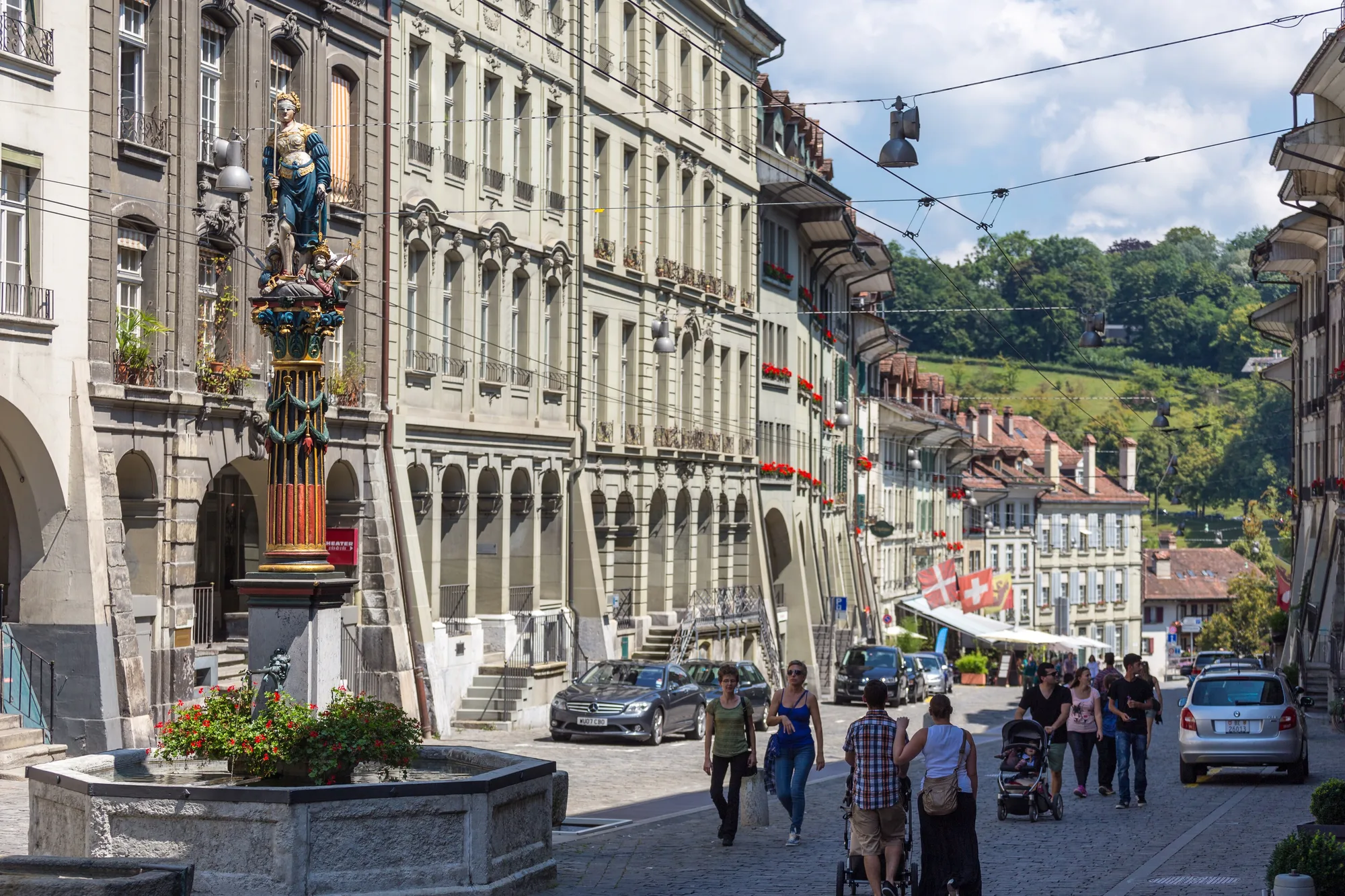

Old Town restaurants on a summer evening
How eating in Bern works
Bern eats the way it lives: unhurried, quality-first, and a little understated. This is not a city of grand culinary theatre. It is a city of vaulted sandstone cellars where the fondue comes to the table bubbling, of market squares where the produce is local and the cheese is regional, and of arcade cafés where a coffee and a slice of cake is a perfectly legitimate way to spend an hour. Food here leans on the surrounding Emmental dairy country, the lakes and rivers, and a strong Swiss-German baking tradition, with a French accent that grows stronger the closer you get to the language border just west of town.
The single most useful thing to understand before your first meal is that Bern is genuinely expensive, even by Swiss standards. Switzerland uses the Swiss franc (CHF), not the euro, and Bern is the federal capital with the wages and rents to match. A sit-down dinner with a drink in a normal Old Town restaurant is a real expense, and a fondue or fine-dining evening more so. None of this means you cannot eat well on a budget — the market hall, bakeries, the daily lunch special and self-service spots all exist for exactly that — but go in expecting Swiss prices and you will not be ambushed. We deliberately do not quote exact menu prices here, because they drift and vary; treat “Swiss capital” as your mental baseline and check the board before you sit down.
The rhythm of the day matters too. Lunch (roughly 11:30–14:00) is when restaurants are busiest and best value, thanks to the daily lunch special. Dinner runs later and longer, and many kitchens stop serving earlier than visitors from southern Europe expect — if you want a hot meal at 22:00 you will have fewer options than you think. Sundays are quiet: a lot of shops and some restaurants close, though the Old Town tourist core and the bigger cafés stay open. When in doubt, a glance at the venue’s own page before you set out never hurts.
Geography flavours the plate, too. Bern sits where Swiss-German Switzerland meets the French-speaking part: the language border runs just to the west, past Fribourg, and you can taste the influence. Hearty, cheese-and-potato Swiss-German cooking dominates, but French touches — more refined sauces, more wine in the kitchen, the odd croissant done properly — creep in as you move toward Gruyère and Vacherin country. The Emmental dairy hills to the east supply much of the cheese, the lakes supply fish, and the surrounding farmland keeps markets genuinely local. For a city its size, Bern eats remarkably close to its source.
The dishes that define eating in Bern
Rösti
If one plate says “Bern,” it is rösti: grated potato pressed into a pan and fried golden and crisp. It started life as a farmer’s breakfast in the Bernese countryside and is now eaten at any hour, plain or loaded with bacon, melted cheese, a fried egg (the “Berner Rösti”), or alongside meat and a fried egg on top. Good rösti is crunchy outside and tender within — not greasy, not soggy. It is comfort food in the truest sense, and one of the better-value warm meals you can order. For where to find the best, see the best rösti in Bern.
Fondue
Cheese fondue is the great Swiss winter ritual, and Bern does it in atmospheric vaulted cellars that feel made for it. A communal pot (caquelon) of melted cheese — classically a blend such as Gruyère and Vacherin Fribourgeois, deglazed with white wine and a touch of kirsch — sits over a burner while you dip cubes of bread on long forks. The etiquette is half the fun: stir in a figure-eight, don’t lose your bread in the pot (tradition says you owe the table a round if you do), and fight politely over the crust that forms at the bottom, the prized “la religieuse.” Fondue is a cold-weather dish — most locals consider it strictly autumn-to-spring — so a summer fondue is a tourist move, though some places oblige. Plan your night around the best fondue in Bern.
Raclette
Fondue’s sibling: a half-wheel of raclette cheese is heated until the cut face bubbles, then scraped over boiled potatoes, cornichons, pickled onions and cured meats. It is heartier and less fussy than fondue, equally communal, and equally a winter favourite. You’ll find it on menus and, in season, at market stalls where the smell of melting cheese carries across the square.
Berner Platte
The hometown feast. The Berner Platte is a groaning platter of meats — smoked and boiled pork cuts, sausages, bacon, beef or tongue, sometimes ham — piled over sauerkraut, beans and potatoes. It is said to commemorate a Bernese victory and is built for sharing, cold weather and a serious appetite. This is the dish to order when you want to eat the way old Bern ate: rustic, generous and unmistakably regional.
Läckerli & chocolate
Switzerland is chocolate country, and Bern is no exception — Toblerone was famously created here. Expect excellent chocolatiers and confectioners, from grand houses to small Old Town shops where the pralines are made on site. On the spiced-biscuit side, look for Läckerli (a firm honey-and-spice gingerbread, most associated with Basel but widely sold) and Bern’s own seasonal baked goods. A box of pralines is the easiest good souvenir in town; browse the best chocolate shops in Bern.
Zibele — the onion tart of the Zibelemärit
Once a year Bern goes mad for onions. The Zibelemärit (Onion Market) falls on the fourth Monday of November — 23 November 2026 — when the upper Old Town fills before dawn with stalls of onion braids, garlic, and seasonal treats. The food to seek out is the Zibelechueche (onion tart/quiche) and Glühwein to keep warm, plus mountains of onion-shaped sweets. It is one of the most atmospheric food days in the Swiss calendar; arrive early, dress warm, and expect crowds.
Want the full regional picture — the cheeses, the history, the dishes by season? See our deeper guide to Swiss cuisine in Bern.
Beyond the headliners
Bern’s table runs deeper than fondue and rösti. Lake fish appears on menus when it’s good — perch fillets (Egli) and whitefish (Felchen) from the nearby lakes, usually pan-fried and simple. The wider Swiss-German repertoire turns up too: Zürcher Geschnetzeltes (veal in a creamy mushroom sauce, often served with rösti), hearty sausages such as the Bratwurst and the long, mild St Galler, and Cervelat, the national grilling sausage that locals split and char over a fire. In autumn, watch for game (Wild) on menus — venison and chestnuts are a seasonal treat.
On the sweet and baked side, the Konditorei (pastry-and-cake shop) is a Bernese institution. Look for nut- filled Engadiner Nusstorte, fruit flans (Wähe), buttery braided Zöpf bread on weekends, and Meringue with thick cream — a regional indulgence said to have been perfected in the Emmental. Around Christmas the markets bring spiced biscuits (Mailänderli, Brunsli, Zimtsterne) and hot Glühwein; in autumn, the Zibelemärit brings its onion tarts. Eating with the season is the surest way to eat the real Bern.
To drink, Switzerland makes more wine than most visitors realise — little of it leaves the country — so ordering a local glass (a Chasselas white or a Pinot Noir) is a small adventure in itself. Beer is popular and there’s a lively craft scene; an Apfelschorle (apple juice with sparkling water) is the standard soft option. And the coffee culture is real: a “Kaffee crème” is the everyday black-with-cream order, while a Schale (milky coffee) suits a slow arcade morning.
Where to eat, by mood
Old Town cellars
The Old Town is honeycombed with vaulted sandstone cellars, many of them now restaurants and wine bars. Descending a stone stair off Kramgasse or Gerechtigkeitsgasse into a candle-lit Keller is the most quintessentially Bernese way to dine — especially for fondue or a long winter dinner. Start with the best restaurants in the Old Town.
Markets & the food-hall mood
For a good-value, low-commitment lunch, the city’s markets and self-service spots are the answer. The Bärenplatz/Bündesplatz produce markets and the regular farmers’ markets put cheese, bread, charcuterie and fruit within easy reach — ideal for assembling a riverside picnic. See Bern’s farmers’ markets.
Cafés under the arcades
Bern’s café culture is serious and civilised. Specialty roasters, grand traditional Konditoreien and sunny terraces all reward an unhurried morning. Coffee plus a pastry is a real meal here. Browse the best cafés and the best coffee in Bern.
Fondue & raclette nights
A dedicated fondue or raclette evening is its own category — book a cellar, go hungry, and make the cheese the main event. Best from autumn through early spring. Plan it with our fondue guide.
Rösti & comfort food
When you want something hot, hearty and reliably Swiss without a big bill, rösti and a plate of sausage are hard to beat. See the best rösti spots.
Riverside & fine dining
For a special meal, Bern delivers both river-terrace restaurants near the Aare and refined kitchens for a celebration. In summer, eating beside the turquoise water at dusk is a memory in itself. See our restaurant overview and, for a splurge, Michelin-starred Bern.
The secret to eating well for less: the lunch special
The single best value in Swiss dining is the Mittagsmenü — the daily lunch special. On weekdays, a huge range of restaurants, from neighbourhood spots to surprisingly smart kitchens, offer a set lunch (often a main, sometimes with soup or salad) at a fraction of what the same kitchen charges at dinner. It is how locals eat out on a workday, and it lets you sample a good restaurant for far less. Look for a chalkboard or a small printed card by the door listing the day’s Menü or Tagesteller, usually served roughly 11:30–14:00.
A few habits help. Go a little before or after the 12:00–13:00 rush for the best chance of a table. Tap water is fine to ask for, though many places will offer (paid) bottled water by default — saying you’d like tap water is normal. And remember that tipping is not obligatory in Switzerland: service is included by law, so locals simply round up or leave around ten percent for good service, entirely at their discretion. Cards are accepted almost everywhere, but it’s worth carrying a little cash for market stalls.
An honest word on prices & customs
- • Budget for Swiss prices. Eating out in Bern costs real money. The market hall, bakeries, self-service spots and the weekday lunch special are your friends; a fondue, fine-dining or long wine-bar evening is a deliberate splurge.
- • Pay in francs. Switzerland is not in the EU; the currency is the Swiss franc (CHF). Cards work nearly everywhere, but if a terminal offers to charge you in your home currency, choosing CHF usually gives a better rate.
- • Tipping is optional. Service is included by law. Rounding up or about 10% for good service is customary and entirely discretionary — never expected.
- • Mind the clock. Lunch is the bargain; kitchens often close earlier in the evening than you expect; Sundays are quiet outside the tourist core.
- • Seasons matter. Fondue and raclette are winter food; riverside terraces and picnics belong to summer. Eat with the calendar and you eat better.
A simple day of eating well
If you only have a day or two, here is the low-stress way to eat your way through Bern without overspending. Start with a proper café breakfast under the arcades — a Kaffee crème and a fresh pastry or some bread, cheese and jam — and let it run long; the morning light on the sandstone is worth lingering for. If the weather is fine, detour through a market square first and pick up fruit, cheese and bread for later.
Make lunch your main restaurant meal. The weekday Mittagsmenü lets you eat at a good kitchen for a fraction of its dinner price — this is where to try a rösti, a plate of Geschnetzeltes, or whatever the chalkboard offers that day. Mid-afternoon, build in a chocolate stop or a slice of nut torte with coffee; it’s a local ritual, not an indulgence to feel guilty about.
Save the evening for atmosphere over economy. In cold months, that means a cellar fondue or raclette, eaten slowly with a glass of Swiss white. In summer, it means a riverside terrace as the Aare turns from turquoise to grey-blue at dusk, or a picnic on the Marzili lawns with your market haul. Either way, you’ll have eaten the real Bern — market-fresh, regional, unhurried — without the bill of three full restaurant meals. For where to put each of these, dip into restaurants, cafés and Swiss cuisine.
Frequently asked questions
Is Bern expensive for food?
Yes. Bern is the Swiss capital and prices reflect it. A normal restaurant dinner with a drink is a real expense, and fondue or fine dining more so. The good news is that value exists: the weekday lunch special, bakeries, market stalls and self-service spots let you eat well without a big bill. Currency is Swiss francs (CHF), not euros.
What should I eat in Bern at least once?
Rösti and a proper cheese fondue (in a vaulted cellar, ideally in cooler months) are the two essentials. If you have a big appetite and it’s cold out, the Berner Platte is the local feast. And no trip is complete without good Swiss chocolate.
Can I get fondue in summer?
You can, but most locals treat fondue and raclette as cold-weather food — rich, melted cheese is heavy on a hot day. Plenty of tourist-facing cellars serve it year-round if you really want it; otherwise save it for autumn through spring and eat by the river in summer instead.
Do I need to tip in restaurants?
No. Service is included in the price by law. It’s customary to round up or leave roughly ten percent for good service, but it’s entirely optional and never expected.
Is it easy to eat vegetarian or vegan in Bern?
Yes — Bern is comfortable for plant-based eating, with dedicated vegetarian self-service restaurants and veggie options on most menus. Classic dishes help too: cheese fondue, raclette and rösti are all vegetarian, and rösti is easily made vegan.
What’s open to eat on a Sunday?
Sundays are quieter and many shops close, but the Old Town tourist core, larger cafés and a good number of restaurants stay open. If you have a specific place in mind, a quick look at its hours the day before saves a wasted walk.
All food & drink guides
Next reads
Keep exploring Bern with guides that pair well with this one.


