When to Visit
Seasonal Guides
Bern shifts with the seasons. Pick your month for the right pace, the right layers, and the right terraces.

Bern through the year
Bern is a four-season city, and the good news is that its single best asset works in any weather: the UNESCO Old Town’s covered arcades (the Lauben) run for roughly six kilometres, so you can wander the medieval centre dry-shod whether it’s pouring, snowing or blazing. What changes from season to season isn’t whether you can enjoy Bern—it’s the pace, the layers, and which extras are open. Here’s how the year tends to feel.
Spring (March–May)
The transition months. Early March still leans wintry, but by April the days stretch out, the Rosengarten’s 220 rose varieties begin their long bloom, and the University’s Botanical Garden moves to longer outdoor hours. Café terraces reappear, the riverside paths green up, and day trips to Thun and the lakes start to make sense again. Pack for both worlds—a warm layer for grey mornings, sunglasses for bright afternoons. See Bern in March and Bern in April.
Summer (June–August)
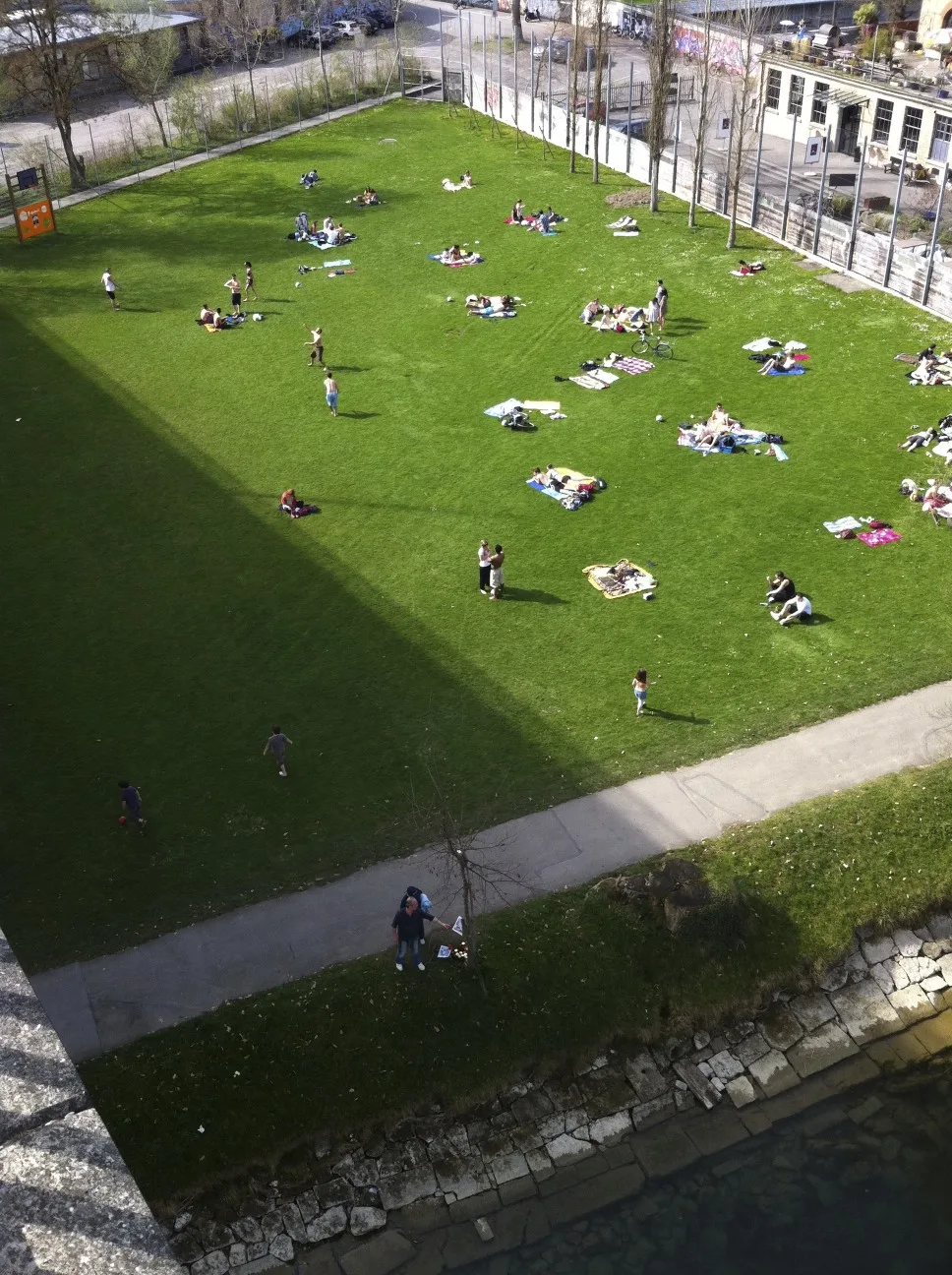
Bern’s headline season, and it revolves around the Aare. From roughly June to September the river warms to around 20°C and the city swims it—but only confident swimmers should, because the current is strong, there are no lifeguards, and you must climb out at the marked Marzili exits before the weir. The free Marzilibad lido fills with locals, terraces stay open late, and the festival calendar peaks: Gurtenfestival on the local mountain in July, and Buskers Bern filling the Lower Old Town with street music in August.
Autumn (September–November)
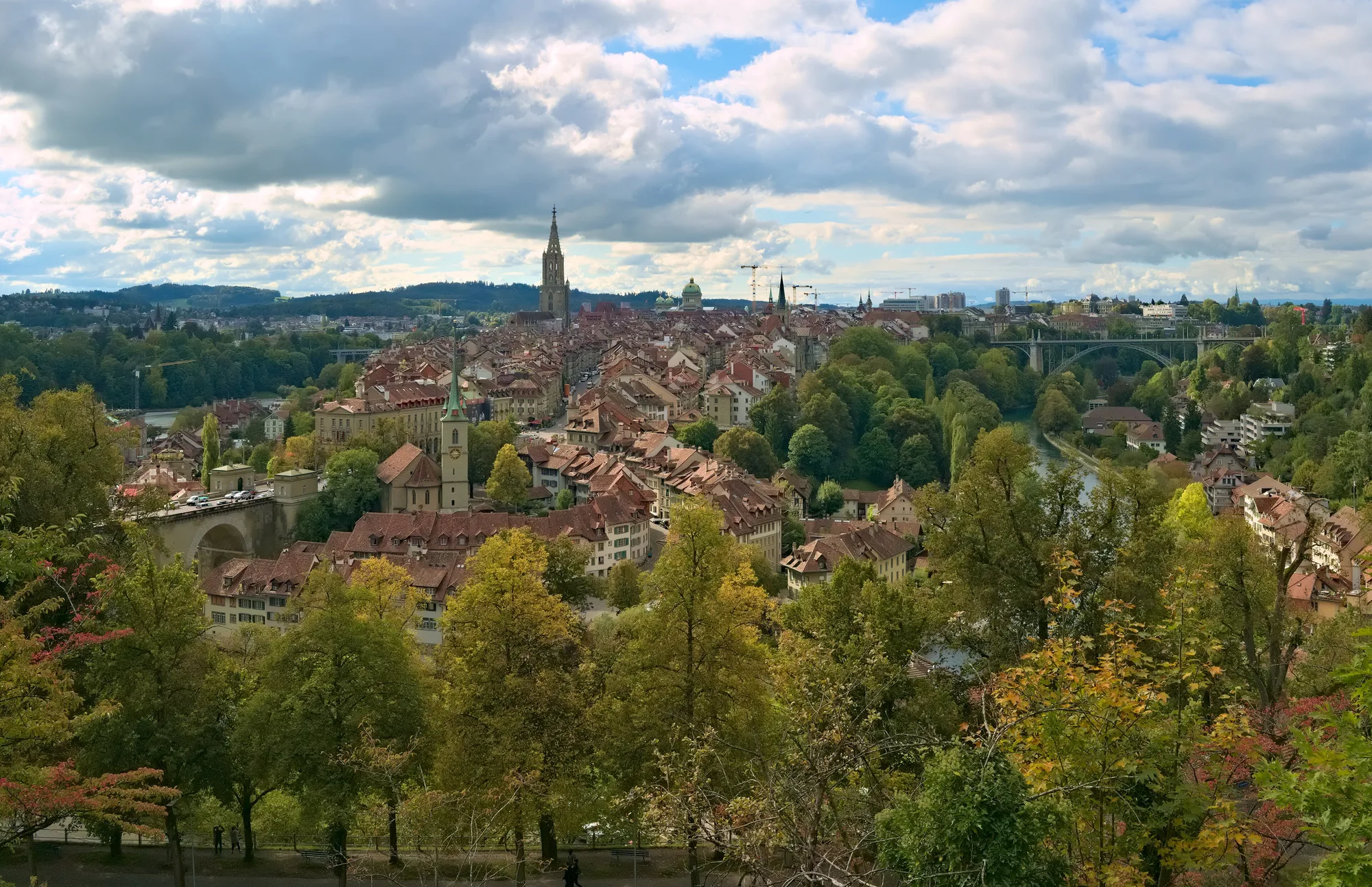
A quietly lovely stretch: softer light over the brown-tiled rooftops, fewer crowds, and the rooftop view from the Rosengarten at its most photogenic. The season closes with one of Switzerland’s great folk events—the Zibelemärit, Bern’s centuries-old onion market, held on the fourth Monday of November (in 2026, that’s Monday 23 November), when the squares fill with onion plaits, onion tarts, mulled wine and confetti from dawn.
Winter (December–February)
Short days, but cosy ones. The Christmas markets run from late November through December, mainly on Waisenhausplatz and Münsterplatz, several of them under cover and heated. Restaurants set out fondue and raclette, the arcades keep walking comfortable, and clear cold days deliver crisp Alpine views. Plan viewpoints for daylight and let the evenings belong to candlelit cellar dinners. Our winter guide and February guide go deeper.
What changes with the season—and what doesn't
A handful of Bern’s best experiences are open and free no matter when you arrive, which makes the city unusually forgiving to plan. The UNESCO Old Town and its painted Renaissance fountains, the BärenPark on the river bend (free, open around the clock), the Rosengartenviewpoint and the riverside paths along the Aare are there in every season. The covered arcades mean even the wettest day stays walkable, so you never have to write Bern off because of the forecast.
What does shift is the supporting cast. Garden and lido openings, festival dates, river swimming and a few seasonal viewpoints follow the calendar:
- • River & lido: Aare swimming and the free Marzilibad open-air pool run roughly mid-May to mid-September; the rest of the year the river is for walking beside, not in.
- • Gardens: the University Botanical Garden keeps longer outdoor hours in the warmer months; the Rosengarten’s roses peak from late spring into autumn, and its seasonal restaurant runs roughly March to November.
- • Festivals: Gurtenfestival (July) and Buskers Bern (August) headline summer; the Zibelemärit (fourth Monday of November) and the Christmas markets (December) carry the winter calendar—confirm exact dates for your year on the official pages.
- • Daylight: midsummer evenings stretch past 21:00, while December light fades by mid-afternoon, so winter days reward an early start and an indoor evening.
For dated happenings across the whole year, our events calendar tracks what’s on and when.

Winter Guide
Cozy routes, indoor anchors, and classic Bern atmosphere.

Bern in February
Short-day pacing, cafés, museums, and viewpoint windows.

Bern in March
Transition season: spring hints with winter-proof backups.

Bern in April
Longer daylight, gardens, markets, and easy day trips.

Bern in the Rain
Arcades routes + museums + cafés that save the day.

Day Trips
Lakes, Alps, and small towns within easy reach of Bern.
The “Flexible Day” Template (Works in Any Month)
When the forecast is uncertain, build the day around pieces that can swap places without breaking the vibe:
- • Start with an Old Town arcades walk (works in sun, wind, rain, or snow).
- • Add one indoor anchor (museum or guided tour) if the weather turns.
- • Keep one viewpoint as a “window” for when skies clear.
- • Finish with a warm, slow meal in the Old Town.
For routes, use the Old Town walking tour.
How to pick the right time to visit
There’s no bad time to see Bern, only different versions of it. Use this quick decision guide to match the season to what you want most:
- • Want to swim the Aare and sit on terraces? Come June to August. It’s the liveliest, longest-day stretch—and the only window for river floating.
- • Want the lowest crowds and softest light? Late September to early November rewards you with quiet streets, autumn colour and great photography.
- • Want festive atmosphere? December for the Christmas markets, or late November for the one-of-a-kind Zibelemärit.
- • Travelling on a budget or hating crowds? February and March are the calmest, cheapest months—lean into cafés, museums and the arcades.
- • Planning day trips to the Alps? April to October keeps the mountain excursions and lake boats running reliably.
Whatever month you land in, build a flexible day (above) and keep one indoor anchor and one viewpoint on the list so the weather never makes the call for you.
Frequently asked questions
What is the best month to visit Bern?
For warm weather and the full river-swimming, terrace-and-festival experience, July is the sweet spot. For fewer crowds, lower prices and lovely light, aim for May or late September. There’s no wrong answer—the arcades keep the Old Town enjoyable year-round.
When can you swim in the Aare?
Roughly June through September, when the river warms to around 20°C. It’s only for confident, experienced swimmers: the current is strong, there are no lifeguards, and you must exit at the marked Marzili railings before the weir. Don’t go in at high water or after heavy rain.
When are Bern’s Christmas markets?
They run from late November through December, with the main markets on Waisenhausplatz and Münsterplatz (plus the Sternenmarkt). Exact dates are set each autumn, so confirm the current year before you travel.
Does it rain a lot in Bern?
Bern gets its share of grey days in every season, but it barely matters here: the covered arcades, compact museums and cosy cafés make a rainy day perfectly pleasant. See our rainy-day guide for routes that stay dry.
More Seasonal Reads
Next reads
Keep exploring Bern with guides that pair well with this one.


