
Wine Bar, Historic Cellar
Abflugbar
$$$A vaulted cellar wine bar with intimate lighting and a "secret Bern" feel. Ideal for date nights, slow conversations, and the kind of evening that ends with an Old Town stroll.

Wine
Cellar atmosphere, aperitivo energy, and the perfect Old Town night
Bern does wine the quiet way: hidden doors, vaulted ceilings, and bars that feel like they have been there for centuries. The Old Town is full of cellar spaces that turn a simple glass into a whole atmosphere. This guide focuses on the places and planning tricks that make an evening feel effortless.
Aperitivo hour, then a cellar wine bar.
Low light, slow pace, and no rush.
For the smallest cellars, booking can matter on weekends.
A vaulted cellar wine bar with intimate lighting and a "secret Bern" feel. Ideal for date nights, slow conversations, and the kind of evening that ends with an Old Town stroll.
Late-night atmosphere under the arcades

Italian Wine, Aperitivo
Bindella's Italian ristorante in the Old Town, whose Enoteca wine bar puts a strong wine focus on Italian labels. A good choice for an early evening aperitivo that can stretch into dinner mood without feeling heavy.

Wine Pairing, Modern
For wine lovers who want structure: pairing-focused dining in a modern setting. The wine list is part of the story, not an afterthought.
Switzerland makes genuinely excellent wine, but it exports almost none of it — the great majority is drunk at home, which is exactly why you so rarely see a Swiss bottle on a wine list abroad. That makes an evening in a Bern wine bar one of the best chances you will get to try it: small-production whites and reds from steep alpine vineyards that mostly never leave the country. Order a Swiss glass here and you are drinking something most visitors back home simply cannot buy.
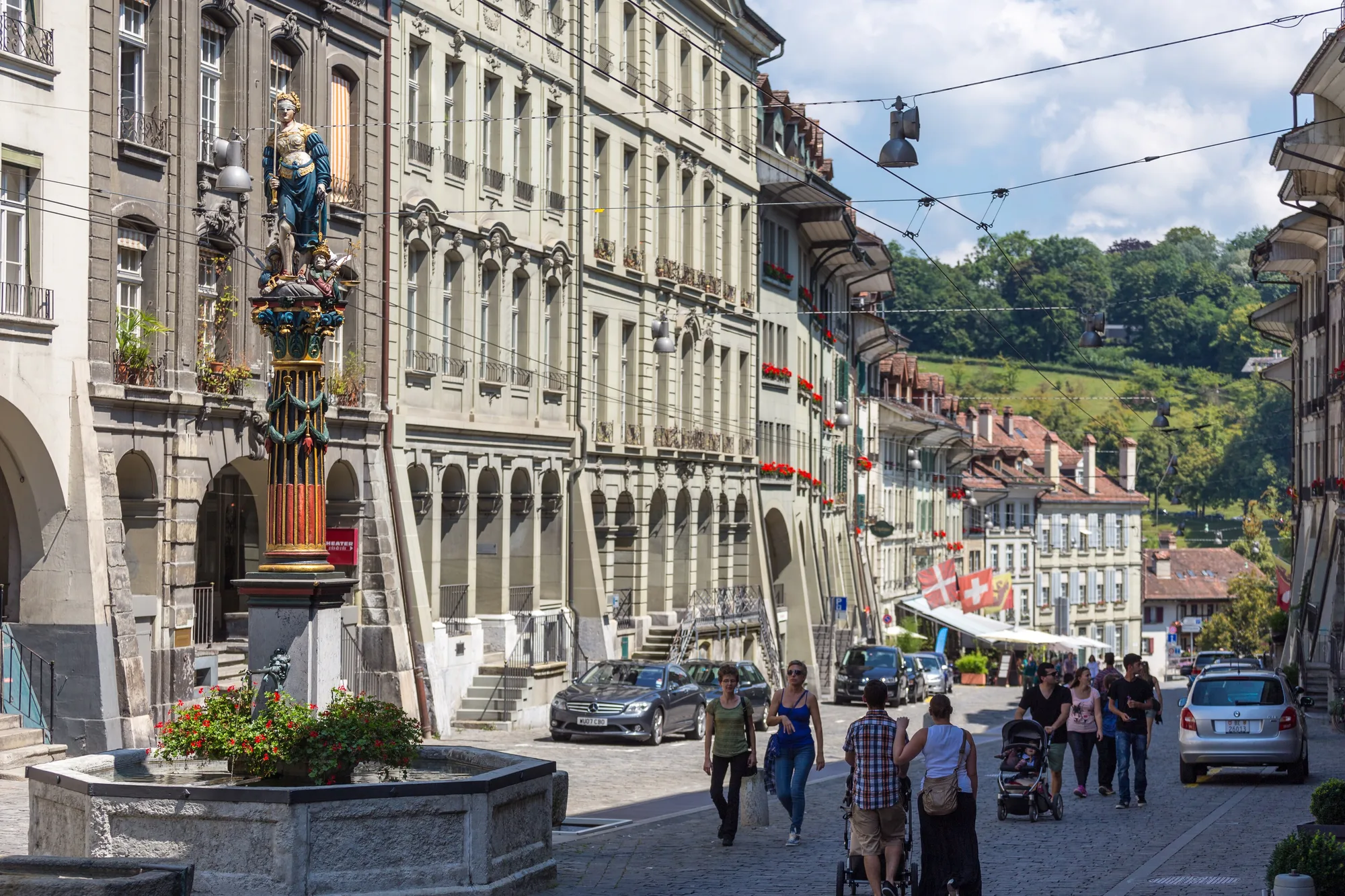
Bern wraps that around its own ritual. The apéro — a pre-dinner drink with a few snacks — is woven into Swiss social life, the unhurried hour when the day ends and the evening has not quite begun. The Old Town is built for it: kilometres of covered arcades (the Lauben) and a string of vaulted cellars tucked behind unassuming doors, where a single glass can turn into a whole atmosphere. You do not come for a vast international list; you come for low light, stone vaults and a local pour.
A few practicalities help. Switzerland uses Swiss francs (CHF) and is not in the EU, so prices read high to most visitors — wine by the glass included. Service is included by law, so tipping is not obligatory; rounding up or leaving around ten percent is customary and entirely discretionary. Cards are accepted almost everywhere, but it is worth carrying a little cash for the smallest cellars.
Switzerland's signature white grape — light, dry and mineral, with a gentle character that lets the terroir speak. In the Valais it goes by the name Fendant. It is the classic Swiss apéro white and the traditional partner for fondue, raclette and lake fish, so if you want one glass that tastes the most “Swiss,” start here.
Pinot Noir is the country's leading red grape, grown across the German- and French-speaking cantons and often elegant and food-friendly rather than heavy. It is the safe, rewarding red to order almost anywhere in Bern, and a fine match for charcuterie and Alpine cheeses on an apéro board.
Dôle is a traditional Valais blend built around Pinot Noir (usually with Gamay) — a soft, approachable red that turns up on many Swiss lists. Asking for a Dôle is an easy way to drink local without studying the whole list.
The wine region closest to the city is the Three Lakes area (Drei-Seen-Land), around Lake Biel/Bielersee, Neuchâtel and Murten. The terraced vineyards above Bielersee, especially around Twann, produce fresh Chasselas and Pinot Noir almost on Bern's doorstep — the most local glass you can order.
For breadth, look to the two best-known cantons. Lavaux, the steep terraced vineyards above Lake Geneva in Vaud, is a UNESCO World Heritage wine region. Valais is the largest wine canton, the home of Fendant and Dôle. Both appear on serious Bern lists and are worth a glass if you want to compare regions in one sitting.
You rarely need a famous name in Bern — you need the right room. Look for a vaulted cellar or an arcade-level bar with a short, local-leaning list rather than a long international one; a tight Swiss-focused list is usually the sign of a place that cares. The smallest cellars fill up, so on a Friday or Saturday a quick booking saves you standing on the cobbles.
A wine bar is best as one beat in a longer Old Town evening rather than the whole plan. The classic shape is apéro, then dinner, then a final glass and a slow walk under the arcades home.
Because Switzerland exports very little of it. The country makes excellent wine in small quantities and drinks almost all of it domestically, so it rarely reaches foreign shelves. Trying it on the spot in a Bern wine bar is one of the few easy ways to taste it.
Start with Chasselas, Switzerland's signature white — light, dry and mineral, and called Fendant in the Valais. It is the classic apéro white and the traditional partner for fondue, raclette and lake fish, which makes it the most quintessentially Swiss glass on the list.
Pinot Noir is the leading Swiss red — usually elegant and food-friendly — and a reliable choice almost anywhere. If you want something more traditional, ask for a Dôle, the Valais blend built around Pinot Noir.
By international standards, yes — Switzerland uses CHF, is not in the EU, and prices read high, wine by the glass included. The upside is quality and rarity: a couple of thoughtful Swiss glasses are usually a better experience than a cheap bottle. Service is included by law, so tipping is discretionary.
The apéro is the Swiss pre-dinner ritual of a drink and a few snacks — cheese, charcuterie, nuts — in the unhurried hour before a meal. It is a cornerstone of social life here, and a wine bar with a small board is the perfect way to do it.
The nearest wine region is the Three Lakes area (Drei-Seen-Land) around Lake Biel/Bielersee, Neuchâtel and Murten. The terraced slopes above Bielersee, especially around Twann, produce Chasselas and Pinot Noir almost on the city's doorstep — the most local glass you can order.
Keep exploring Bern with guides that pair well with this one.


