
Safety
Aare Swimming Safety
How to enjoy the river the local way—safely
Floating the Aare is one of Bern's most famous summer rituals: a waterproof bag over the shoulder, a confident entry into cold turquoise water, then a fast, scenic drift beneath medieval rooftops. It's also a real Alpine river with a strong current, cold temperatures and hazards that don't negotiate—and crucially, there are no lifeguards. Every year people get into trouble because they underestimate it. This guide focuses on practical safety: how to decide if it's right for you, how to plan a route, where to get out, and how to avoid the classic mistakes.
Important: conditions and local rules change. Sections are sometimes closed for river works or high water, so always check official notices and live river conditions on the day you go. The new daytime guide lives at our Aare river overview.
Check for closures before you go
Some of Bern's most popular Aare sections are occasionally closed—temporarily—for river-protection works, bank repairs or periods of high water. These closures come and go, so the only reliable approach is to check the current notices for your planned stretch on the day, rather than assuming a section is open because it was last summer.
If a closure is in effect, do not "work around it." Pick a different plan: walk the riverside paths, head to the Old Town arcades, or choose a stretch that is explicitly open and safe. Closures exist because something has gone wrong before—respecting them is part of swimming the Aare the local way.
Non-Negotiables
- Strong swimmers only. If swimming in current is unfamiliar, choose riverside walks instead.
- No alcohol. Not before, not during.
- Never go alone. Go with a buddy who can help if something goes wrong.
- Know your exit point. Before entering the water, identify where you will get out.
- Respect closures and restrictions. They exist because something has gone wrong before.
Best Season
The classic Aare float is a warm-month activity. Water is cold even in summer, and conditions after heavy rain can become riskier. Outside the warm season, treat the Aare as a walking route and photo backdrop.
Route Reality
Popular routes can feel “easy” because so many locals do them—but the river remains fast. People get into trouble when they underestimate the cold, panic mid-stream, or miss exit points.
What to Bring (The Local Kit)
- Wickelfisch (waterproof swim bag): Put clothes, towel, phone, and valuables inside; it doubles as a float support.
- Water shoes: Many entry/exit points are rocky or slippery.
- Warm layer for after: The “afterdrop” chill is real once you get out.
- Minimal extras: The lighter your kit, the calmer you’ll feel in current.
Entry and exit points (the part that matters most)
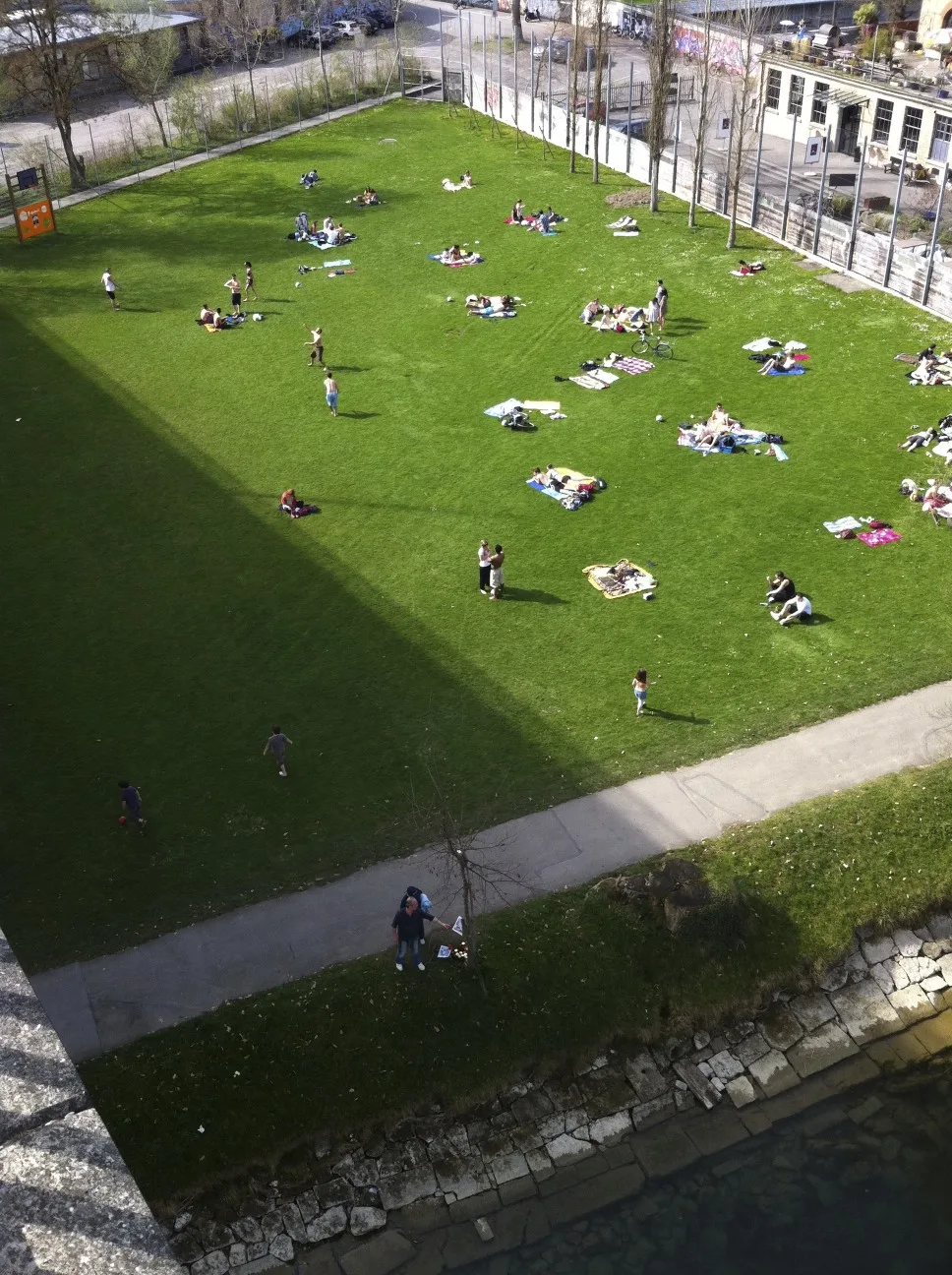
More than anything else, swimming the Aare safely comes down to getting out at the right place. The classic float starts upstream at the Eichholz lawns and ends at the big Marzili lido below the Bundeshaus. The single most important rule: you must climb out at the marked exits—the red railings and signposts—at Marzili, before the weir at the Schwellenmätteli. Miss them and the river carries you toward the weir, which is dangerous. Locals know exactly where to grab the railings; as a visitor, you don't, which is why you scout the exit on foot first.
- Walk your exit before you swim. Stand at the Marzili exit railings so you'll recognise them, and the bank's look, from the water.
- Move toward your bank early. The current is fast; start angling in well before the exit, not at the last second.
- Never pass the last exit. If you're unsure, get out at the first safe opportunity—earlier is always better than later.
- Watch for the weir. The Schwellenmätteli weir is downstream of the swim zone; it is not something to drift toward.
A Simple Safety Plan (Step by Step)
- Check conditions: weather, rainfall, and any official restrictions for your planned section.
- Choose the route: decide entry and exit before you leave home.
- Scout the exit: walk to your exit point first so it’s familiar from the water.
- Pack and seal your Wickelfisch: do a quick leak-check before entering.
- Enter calmly: cold shock is real—take a moment, breathe, then commit.
- Stay aware: keep distance from obstacles, boats, and bridge structures.
- Exit early if needed: fatigue and cold can build fast; getting out “too early” is a win.
How to Decide If It’s Right for You
Green Lights
- Comfortable swimming in open water
- Calm under pressure (no panic if you drift fast)
- Able to swim to the bank and climb out
- Willing to skip the float if conditions feel wrong
Red Flags
- Weak swimmer or uncomfortable in current
- Cold sensitivity or history of panic in water
- Planning to “figure it out” once in the river
- Entering after heavy rain or during unusual conditions
Frequently asked questions
Is it safe to swim in the Aare?
For confident, experienced open-water swimmers who plan their route and respect the rules, yes—thousands do it every summer. But the current is strong and routinely underestimated, the water is cold, and there are no lifeguards. It is not a safe activity for weak swimmers, children floating alone, or anyone unfamiliar with fast water.
How cold is the water?
In summer the Aare warms to around 20°C, which is the comfortable window for the float; outside roughly June–September it's colder. Check the live temperature on aare.guru before you commit—cold shock on entry is real, so ease in.
Where do I get out?
At the marked exits—the red railings and signposts—at Marzili, before the weir at the Schwellenmätteli. Scout the exit on foot before you swim, and start angling toward the bank early; the current won't wait for you.
Are there lifeguards?
No. The river itself has no lifeguards—you are responsible for your own safety. That's why the "never alone, know your exit, skip it if conditions feel wrong" rules matter so much.
When should I not swim?
Avoid the river at high water or after heavy rain, when it runs faster, colder and dirtier; skip it if a section is closed; and don't go after drinking. If anything about the conditions feels off, treat the Aare as a walking route instead.
Prefer a safer river plan?

Next reads
Keep exploring Bern with guides that pair well with this one.


